
Dead Monkey.

The carcass was half buried under some leaves, so it was unclear what kind of animal it was, exactly. All that was obvious was rigor mortis. Nobody paid it much attention. Dead is dead. When it turned out to be a dead macaque, that is when people took note. New Orleans is always interested in monkey business.
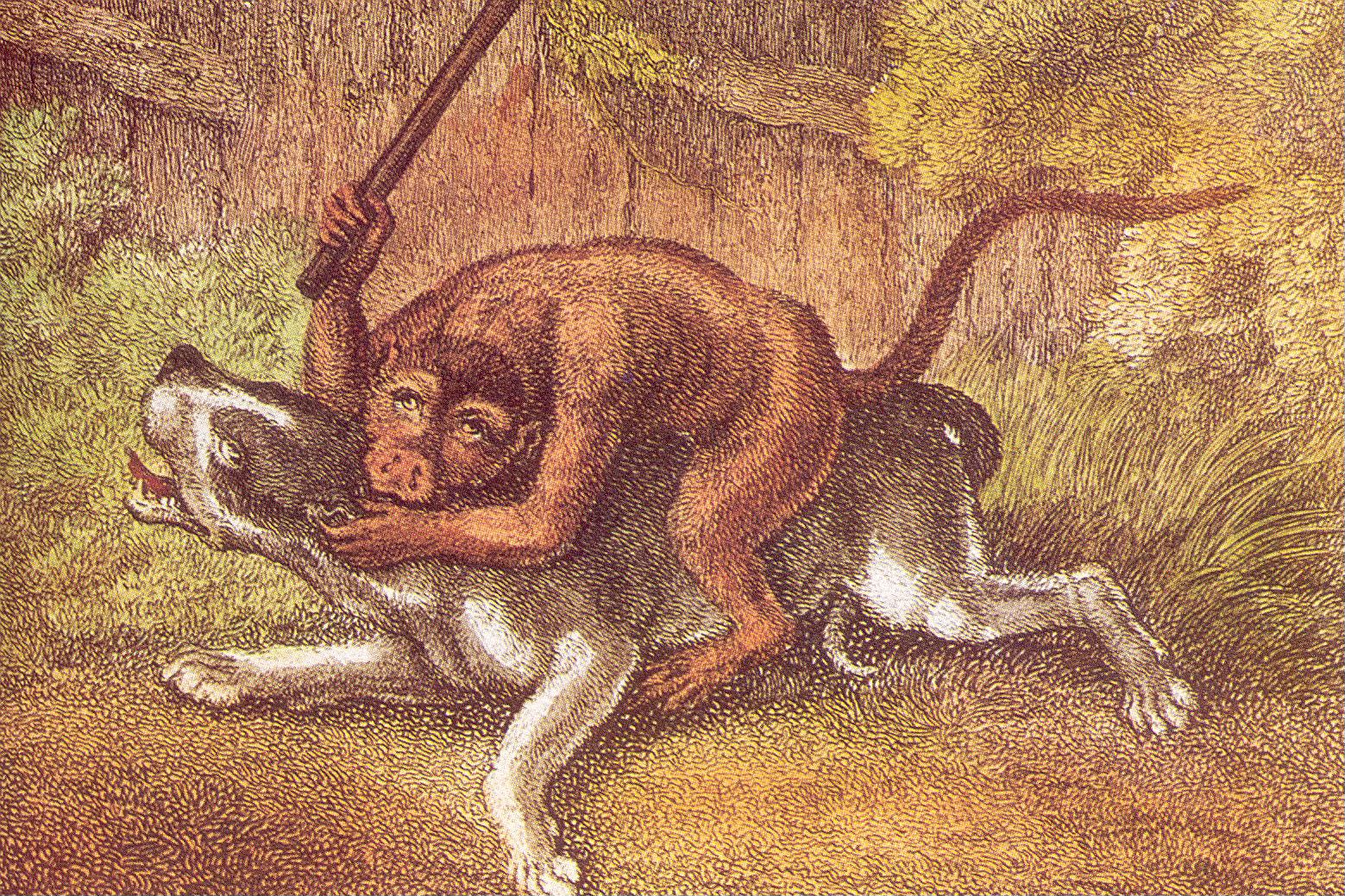
Yes, it is time, once again, to enter the world of Monkey Orleans. New readers don’t know what they are in for. Paying subscribers know ALL about it. Let the fun begin!
This has nothing to do with the recent escape of monkeys from a truck crash in Mississippi. This dead macaque had a much longer pedigree. It was the last monkey to have escaped from the Tulane Primate Research Center in 2005. That was one old monkey. It was identified by the serial number tattooed on its arm.
In May 2005, 57 monkeys escaped from Tulane’s “breeding colony.” In the end, 53 were captured. The others either died or were never found, except this one, Monkey No. 43R5586TLN. All monkeys go to Heaven, even the mischievous ones. In between the here and now and then, some monkeys spend time in New Orleans. They lounge in City Park.
When the monkeys escaped, Tulane University paid the US Department of Agriculture a fine of $685.00. That was in 2005 money. Imagine how much that would be today…
Rhesus macaques are also called long-tailed macaques because their tails are as long as their torsos. The reason they are called rhesus macaques, according to the man who named them, is, because, “rhesus,” is fun to say. He was as right then as he is now.
Rhesus.
There are islands in the lagoon between the Couterie Forest and the Bayou Oaks Golf Course. Unlike other monkey species, macaques like to swim. It is macaques that bathe in those hot springs in Japan on the Discover Channel and in old, dog-eared, bound issues of National Geographic Magazine.
Macaques are like ducks. They don’t sink.
The islands are home to monkey colonies. These are not “breeding colonies” supervised by scientists. The monkeys in City Park have gone feral. The macaques have gone wacky. They wear flowers in their hair.
Monkeys, like apes, like you, use tools. Lots of animals do. Birds, too. Crows smoke cigar butts. I have seen it with my own eyes.
Do you want to smile? Say, “Rhesus.”
Why do you think the peanut butter cups are named the same? They are spelled differently because nobody likes to associate monkeys with peanut butter, especially when chocolate is involved. That is not the stuff from which commercials are made.
People walked by the dead monkey under the leaves. All that was sticking out was a tail. Nobody knew what it was. It was sticking straight out, like a broom handle. It was rigor mortis in extremis. It looked like a hairy broom handle but that was no broom on the other end.
Two boys were playing catch in the City Park. It was a beautiful day. 76 degrees on a mid-December day is a blessing in disguise. It feels good in the moment but the next day will bring a thirty degree drop. There is no getting used to it. Agony-respite-agony-respite— that’s the way it goes.
When it’s a nice day, families go the City Park. You must have gone to Audubon Park. It is nice there, too, for different reasons. Those islands are rookeries.
The boys were tossing a tennis ball. How many times could they catch it in a row? They were up to fifty-six passes. The sun was in Jimmy’s eyes, so he missed it when Carl tossed him the tennis ball. The ball landed in the leaf pile.
The story of the dead macaque began to be completed another day. I think worms are involved. I will have to check my notes.
