The Batture

I may have already written about this. Same river, different water, Grasshopper. Pay attention to the moment. A big-hearted river scythes through it uncaringly. With two sides between the West Bank and the East Bank, the sharp end of the scythe faces south.
Between both banks lies the batture. If you ever want to dump a dead body, do it on the batture, where evidence disappears. It washes down to La Balise.
You can look up whatever you don’t understand. It will make just as much sense, only more so.
Nothing ventured means nothing gained. Let’s go.
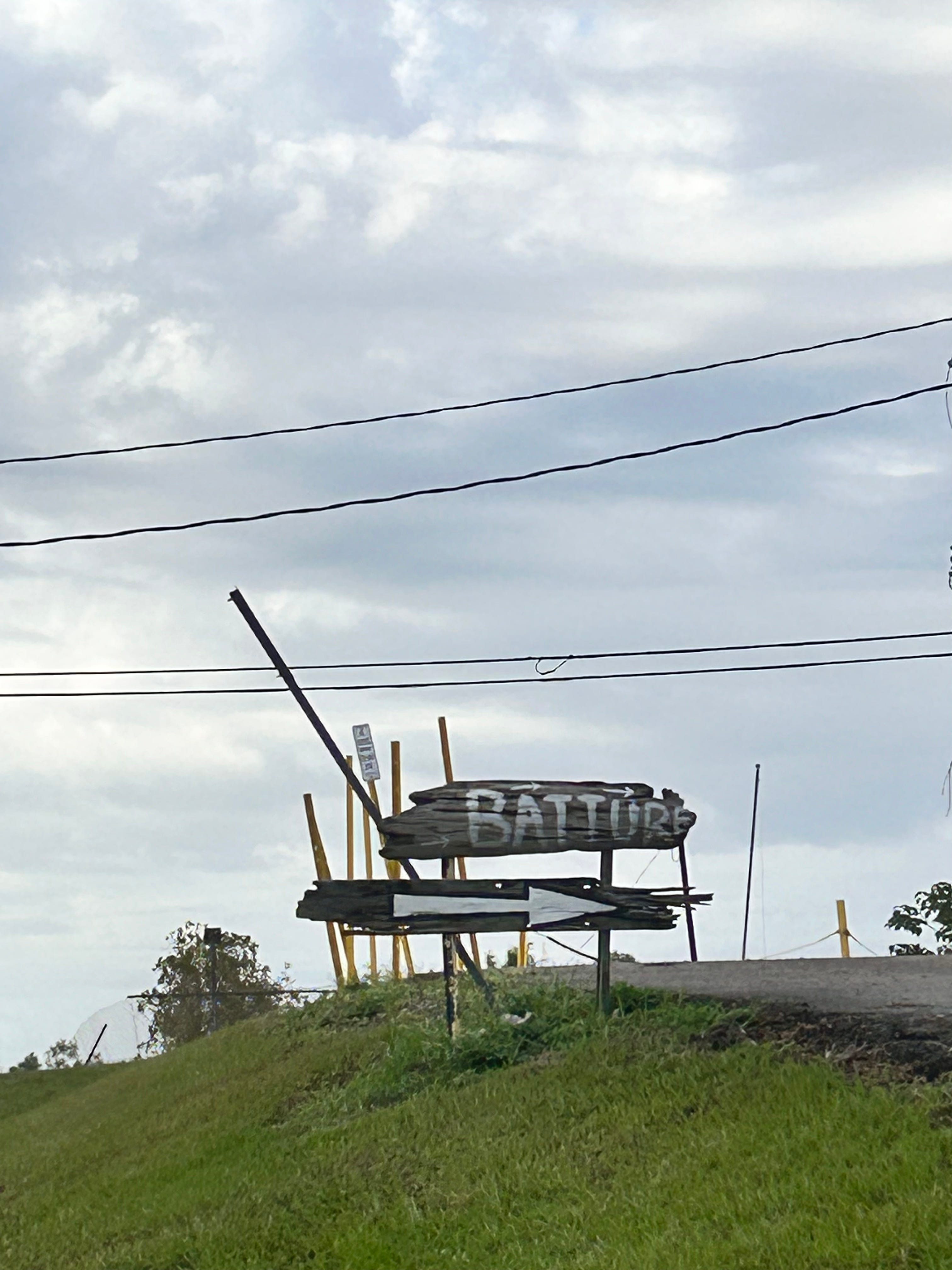
All along the levee, not just on the other side of the Fly, the batture snakes its riverine, sibylline undulating ebb and flux. The Mississippi River is the Big Muddy. It leaves its slough on its banks and it shrugs it off again season after season.
When the river is high, we look up to see cargo ships, stacked high, floating above sea level. They float above a street level. We look up. Where to the ships come from? Where do they go? Only dockworkers know.
The port is on the other side of the levee. The batture faces the faces the river. The port overlays the batture. There are very few stevedores. Most of the loading and unloading is done by robot cranes. Hardly anyone works at the port anymore. What happens on the other side of the levee wall remains a mystery.
This has always been the way.
The Mississippi River has a natural levee of about 15 feet above sea level. This, coincidentally, is the French Quarter’s elevation. The levee has been built up and reinforced over the years, first by the city, then by the state, then by the Army Corps of Engineers. For longer than there has been a New Orleans, there has been life on the other side of the levee.
There is life on the batture. It is not a life for everyone.
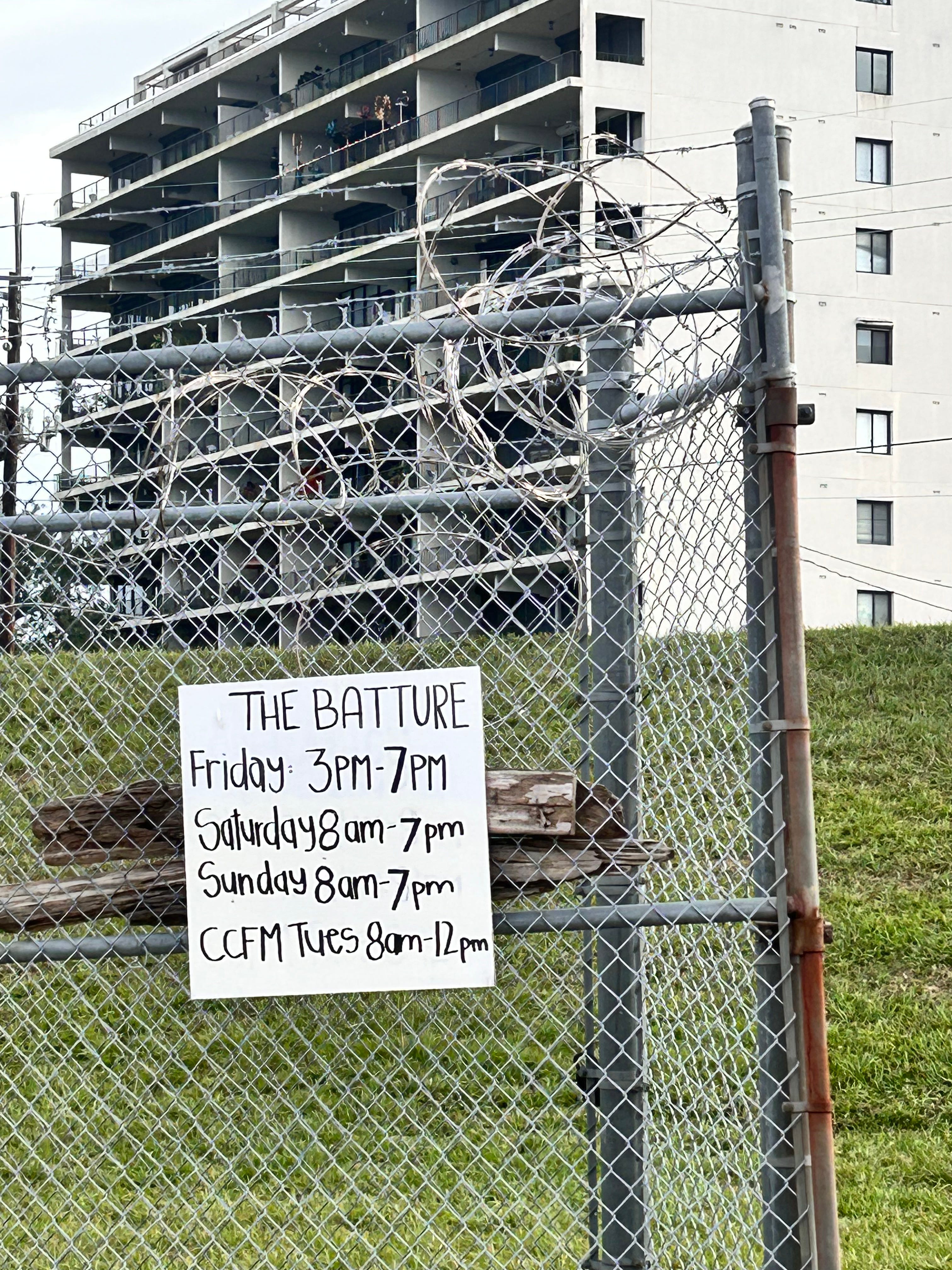
I would like to tip my fez to our new subscribers. It is nice to meet you. I appreciate the paid subscriptions. I will try to make it worth your while.